The Evolution of Stand-Up Comedy in the Digital Age

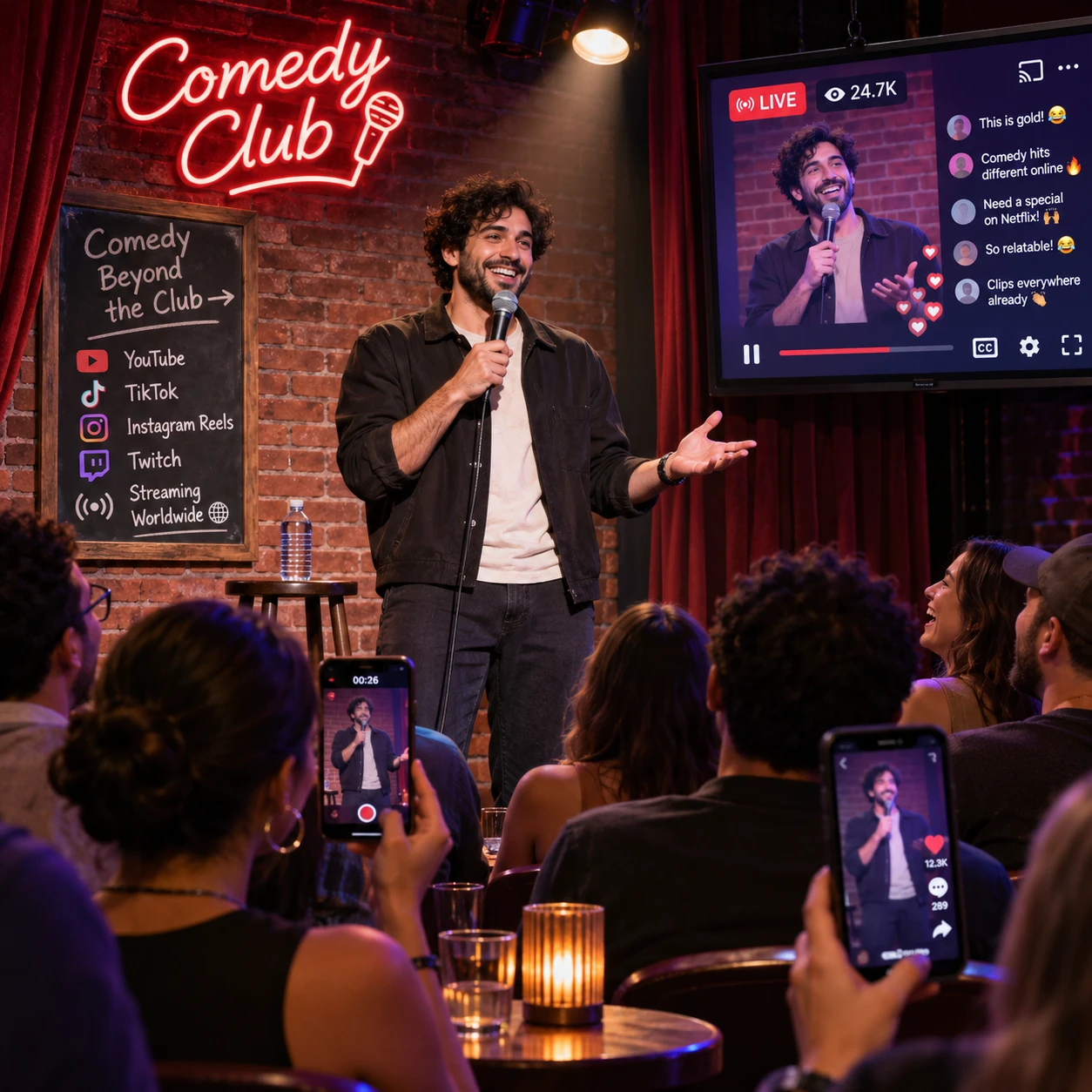
For generations, stand-up comedy grew in rooms: a comic tested jokes at an open mic, refined a set in comedy clubs, and hoped to reach a wider audience through television or a recorded special. Today, those routes remain, but they share the stage with social media, streaming services and short-form video. A joke can travel from a club to a phone screen in minutes, reaching people who may never have heard of the comedian before.
That shift has changed how stand-up is made, discovered and experienced. It has also made the relationship between online attention and live performance more complicated. Digital platforms offer independent comedians new ways to find an audience, but they do not guarantee a lasting career or replace the energy of a room full of people.
From comedy clubs to screens
Digital platforms have expanded how stand-up comedy reaches audiences, while comedy clubs and live performance remain important places to develop material. The major change is that a comedian no longer has to wait for television or a record deal to share work beyond the room.
Traditionally, comics built experience through open mics, small venues and comedy clubs. They learned to read a crowd, adjust a pause, and discover whether a punchline worked in real time. A successful set might lead to better bookings, a television appearance, or a recorded performance distributed through established media. Those routes could bring significant exposure, but they also depended on access to venues, producers and other gatekeepers.
Online distribution has added another path. A performer can post a clip, announce a tour, or share a full performance without first securing a television slot. The audience is no longer limited to people who live near a club or happen to catch a broadcast. At the same time, a clip’s reach can be unpredictable, and online visibility does not automatically translate into ticket sales or sustained interest.
The change is best understood as an expansion rather than a handover: clubs help comics build stagecraft, while screens help performances travel. Each format gives comedians different tools and asks audiences to engage in a different way.
How comedians build an online presence
Comedians build an online presence by sharing material, showing their point of view, and giving audiences ways to follow their work. Social media can help new viewers discover a comic, though success depends on the fit between the material, the audience and the platform.
A posted clip can act like a first introduction. A short bit may reveal a comedian’s rhythm, subject matter and stage persona more quickly than a poster or biography. Some comics also use social media to share observations, behind-the-scenes moments, tour dates and updates about new projects. That creates repeated points of contact, rather than relying on a single performance or media appearance.
Audience engagement can be direct. People respond to posts, recommend a bit to friends, or tell a comic which stories stayed with them. That feedback may help a performer understand what resonates, but online reactions are only one signal. A joke that earns comments on a feed may land differently in a club, where timing and the room’s mood shape the experience.
For independent comedians, digital tools can offer more control over promotion and distribution. They can reach potential fans without a large marketing operation, but they also take on the work of producing content and keeping in touch. An online following is useful when it supports a broader body of work; it can become a distraction when posting replaces writing, rehearsing or performing.
Streaming and the comedy special
Streaming services have made comedy specials easier to watch on demand, giving recorded stand-up a place in the same viewing environment as films and television. A special can introduce a comic to viewers far beyond the venues where that performer tours.
In the past, audiences often encountered a full-length set through a broadcast, a recording, or a limited release. Streaming changed the viewing habit: people can choose a special when they want, pause it, return to it, or share a recommendation. For comedians, a well-produced special can preserve a carefully shaped hour and provide a more complete portrait than a short clip.
Yet the format has its own limits. A recorded special captures one performance, edited and framed for viewers at home. It cannot fully reproduce the tension of a live room, where an audience’s response changes the pace and feel of a set. Nor does being available on a major service mean every viewer will find the special. Discovery still depends on promotion, recommendations and a performer’s existing visibility.
Streaming has also widened expectations about what a comedy special can look and sound like. Some emphasize the intimate feel of a club; others use larger venues and more elaborate production. The best choice depends on the material. A quiet, personal set may benefit from a close-up, while a crowd-driven performance can gain from the scale of a live audience.
Short-form video and the attention challenge
Short-form video helps audiences sample stand-up quickly, but a brief clip cannot represent the full shape of a longer set. It can spark interest in a comedian while encouraging expectations that every joke should deliver an immediate payoff.
Clips often focus on a self-contained moment: a sharp observation, a surprising turn, or a story that works without much setup. That makes them easy to share and convenient for people browsing on a phone. For a new comic, one strong excerpt may prompt viewers to look for a longer set, follow an account or check upcoming shows.
The format can also distort how a performance is understood. A longer routine may build slowly, rely on callbacks, or explore an uncomfortable subject with care. Cut down to a few seconds, it can lose the context that gives the joke its meaning. Comedians may feel pressure to write for the clip rather than the room, especially when quick reactions appear to be the clearest measure of attention.
Clips work best as invitations, not complete substitutes. A useful way to think about digital comedy is as a three-step discovery path: a short video earns a first look, a longer performance builds trust, and a live show lets the audience experience the comic’s timing and improvisation in person.
What digital reach means for live comedy
Digital reach can help comedians sell tickets and attract new audiences, but live comedy offers a shared experience that a screen cannot reproduce. Online visibility and live performance often support each other rather than compete.
A person may discover a comic through a social media clip, watch a special, and then buy a ticket when the comedian visits their city. For touring performers, online channels make it easier to announce dates and remind followers about a show. For audiences, those channels provide a low-cost way to find new voices before committing to a night out.
The live show still has its own appeal. A comedian hears the room react, adjusts a pause, and sometimes responds to an unexpected moment. The audience is part of the event, not simply watching a finished recording. Even familiar material can feel different when shared in a club, theatre or festival setting.
There are practical limits to the online-to-live connection. A follower may live far from a tour stop, prefer watching at home, or enjoy a specific clip without wanting a full show. Digital reach can support ticket sales, but it should not be treated as a reliable promise of a packed room. For comedians, the craft of performing and the work of building an online audience remain related but distinct skills.
New opportunities—and new pressures
Digital platforms give comedians more ways to publish work and connect with audiences, while adding pressure to compete for attention and maintain an online presence. The benefits are real, but they are not shared equally or without trade-offs.
For a comedian outside a major entertainment hub, online distribution can make an audience easier to reach. A performer can share a polished bit, promote a local show, or find viewers who connect with a particular perspective. Audiences also gain access to more kinds of comedy than a small number of broadcasters or venues might have offered.
The costs are less visible. Comedians may spend time filming and editing clips, managing accounts and responding to followers. Platform formats and recommendations can change, so an audience built mainly in one place may be difficult to reach if visibility drops. Public posts also travel without much context; material intended for a specific room can be judged by viewers who saw only a brief excerpt.
A balanced approach starts with the comedy itself. Perform regularly where possible, keep developing longer material, and use digital channels to show people what makes the work distinctive. Measure online activity by whether it helps create meaningful connections, not by a single viral moment. Digital reach can open doors, but lasting progress still comes from writing, performance and an audience that wants to come back.
Frequently asked questions
How has social media changed stand-up comedy?
Social media gives comedians a direct way to share clips, promote shows and interact with viewers. It has broadened discovery beyond clubs and television, while creating more competition for attention and more pressure to post regularly.
Can comedians build a career without performing in comedy clubs?
Some comedians can build audiences through online content, podcasts or other performance formats, but a career without club experience is not the usual path for everyone. Clubs provide practice with timing, crowd response and live storytelling. Digital tools can widen a career’s reach, but they do not replace those skills.
Do online clips help audiences discover live shows?
Yes. A clip can introduce a comedian and give viewers a reason to look for tour dates. The connection is not automatic: people may enjoy a short video without attending a full show, and not every follower lives near a venue.
Are comedy specials still important in the streaming era?
Yes. Comedy specials give performers room to present longer material and let audiences watch a complete set on demand. Short-form video may lead someone to a special, but a full-length performance offers a different sense of structure, voice and pacing.