How Video Games Are Becoming a Powerful Storytelling Medium

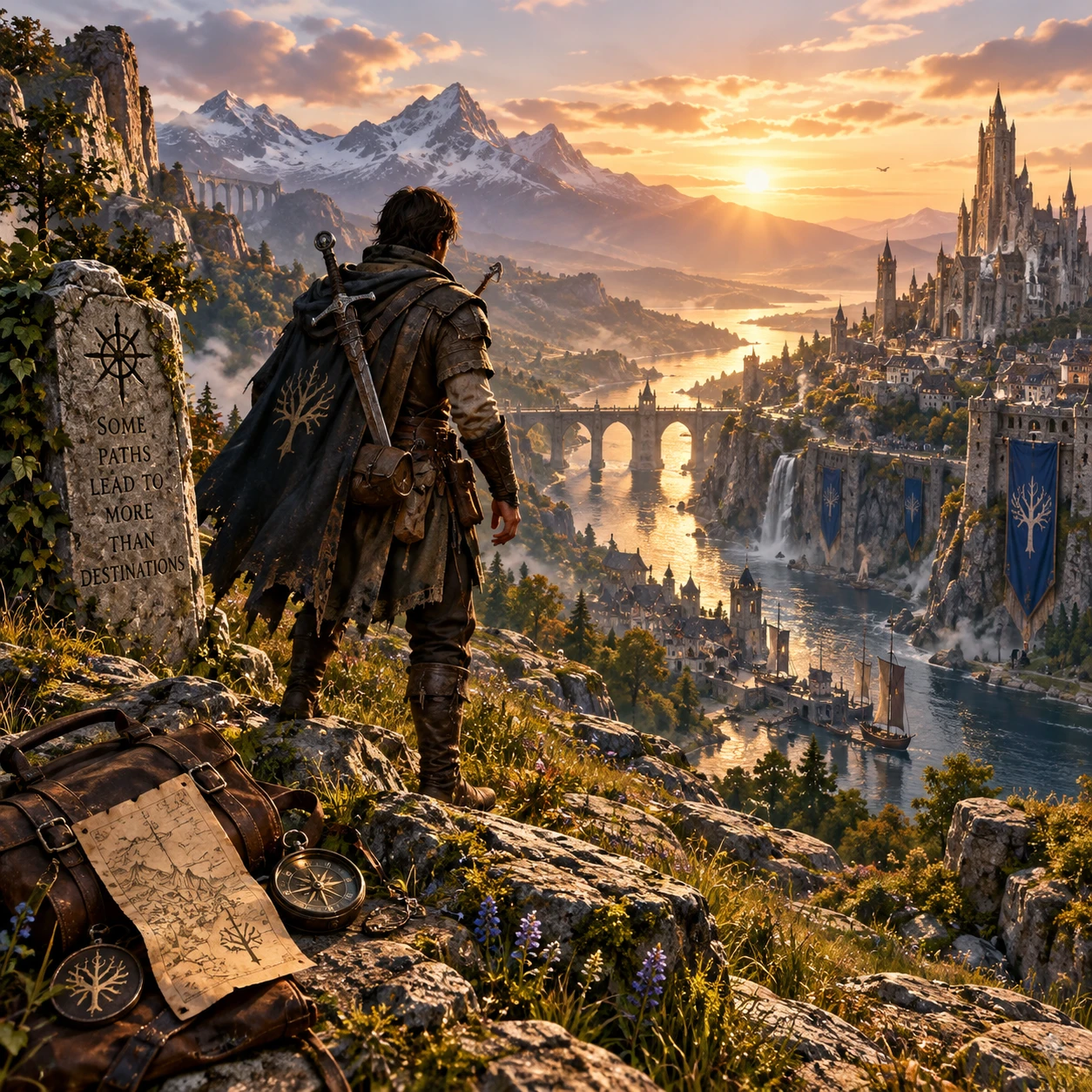
A story can unfold through a novel’s sentences or a film’s images. In a video game, it can also emerge from what the player chooses to do, where they explore, and how they respond to a challenge. That blend of authored narrative and participation is why games are increasingly recognized as a distinctive storytelling medium.
Video games do not replace books or films, and many are designed mainly around competition, puzzles, or play. But when narrative is central, the player’s actions can make the story feel experienced rather than simply watched or read.
From cutscenes to interactive narratives
Video games have moved from relying mostly on scripted scenes toward interactive storytelling, where a player’s actions help shape how the narrative unfolds. The shift lets the player take part in a story rather than only observe it.
Early games often used short text messages, simple plot setups, or brief scenes between levels. As technology and design expanded, developers gained more ways to build characters, settings, and narrative sequences into play. Cutscenes remain common, but they now sit alongside dialogue choices, exploration, playable memories, and events that respond to the player.
That change has also made narrative design a more visible part of game development. Writers and designers consider not only what happens, but what the player is doing at the moment it happens. A tense escape sequence can carry plot and emotion through movement, timing, and danger, while a quiet conversation can give the player time to understand a character.
The result is not always a branching plot. Sometimes the main events stay fixed, while the player controls the pace, discovers details in a different order, or takes responsibility for getting through a difficult situation. Even those forms of participation can alter how a story feels.
What games can do that other media cannot
Games let audiences interact with a story through movement, exploration, and decision-making. This player agency creates a distinctive relationship with the narrative, although the developer still sets the rules and available options.
In a film, viewers follow the director’s sequence of shots. In a book, readers move through words chosen by the author. A game can ask its audience to search a room, protect a companion, or decide whether to spend a scarce resource. The plot may continue along a planned route, but the player has still performed actions inside it.
That participation changes the texture of familiar story moments. A character’s survival can feel more personal if the player has spent an hour helping them. A dangerous journey can communicate exhaustion through repeated obstacles rather than a line of dialogue explaining how hard it has been. The player learns by doing, and that knowledge becomes part of their experience of the story.
Exploration creates another advantage. A game world can hold optional clues, side stories, and objects that reward curiosity without forcing every player to follow the same path. The trade-off is that some people may miss important details, or spend so long exploring that the story’s pacing loses momentum. Good design makes discovery rewarding while keeping the central narrative understandable.
Storytelling through gameplay and worldbuilding
Games tell stories through gameplay mechanics, worldbuilding, and environmental details as well as dialogue. A rule or setting can reveal character and plot while the player is actively engaging with it.
Gameplay mechanics can express a character’s situation. A game about survival might make food, shelter, or ammunition scarce, turning each choice into evidence of the world’s danger. A character who starts with limited abilities and gradually gains confidence can show development through changing play, not just through speeches.
Environmental storytelling uses spaces and objects to suggest what happened before the player arrived. An abandoned home, a damaged machine, or a note left behind can hint at conflict without a narrator explaining every detail. Players connect those clues and build an understanding of the setting for themselves.
This approach feeds into worldbuilding. A believable game world has routines, histories, and visible consequences, even beyond the immediate plot. A busy market, a quiet battlefield, or a locked door can tell the player who has power, what people fear, and what daily life looks like.
The strongest examples make the story and the activity support one another. If a game’s narrative says a character is cautious but its mechanics reward reckless action, the two can feel at odds. That tension can be deliberate, but often it is a sign that the story and gameplay need closer coordination.

Choice, agency, and multiple paths
Player choices can shape events, relationships, and endings, but their influence depends on the game’s design. Branching narratives offer different paths, while many games use smaller choices that change tone or character reactions.
A decision might determine who joins the player, how a conversation unfolds, or whether a difficult task has a peaceful solution. In some games, those decisions lead to substantially different scenes or endings. In others, the main plot remains the same, but characters remember what happened and respond differently along the way.
Choice has limits because a game is an authored work with finite content. Developers cannot prepare every possible response to every action, so they define boundaries. The player might choose between two outcomes, explore freely within a level, or make a role-playing decision that affects only a few later moments.
This does not make agency meaningless. A useful way to judge a choice is to ask three questions:
- Is the decision understandable? The player should have a reasonable sense of what is at stake.
- Does it express character? A choice can matter because it reveals the player’s values, even if the plot barely changes.
- Does the game acknowledge it? A later reaction, altered relationship, or changed situation helps the choice feel seen.
Choices can disappoint when a game promises sweeping consequences but delivers only cosmetic changes. Clear expectations matter. A small decision that meaningfully affects a friendship may feel more satisfying than a grand-sounding choice with no visible result.
How games compare with books and films
The main difference between games, books, and films is the audience’s role: games ask for input, while books and films present a more fixed sequence. Each medium has strengths, and none is inherently better at telling stories.
Film can control framing, performance, music, and editing with precision. A director can guide the audience’s attention from one face to a detail in the background in seconds. Books can share a character’s inner thoughts directly, pause for reflection, or build meaning through language and point of view.
Games trade some of that control for participation. A player may look away from a carefully composed scene to inspect a corner or miss a line while moving through a space. That freedom can make pacing less predictable. In return, the player can inhabit a setting, test its rules, and take part in events the author has arranged.
The media can also borrow from one another. Games use cinematic scenes and literary techniques, while films and books can build intricate worlds and moral dilemmas. The distinctive quality of a game appears when its story depends on what the player does, not simply when it imitates a film with a controller attached.
Challenges and the future of game storytelling
Game storytelling works best when narrative, mechanics, and player freedom reinforce one another. The challenge is balancing authored meaning with enough room for players to act and explore.
A tightly scripted scene may deliver a strong performance but interrupt the flow of play. A highly open world may offer freedom while leaving the central story scattered or easy to ignore. Developers must decide where control matters most: in a fixed dramatic moment, in player-led discovery, or in the consequences that follow a decision.
There is also a practical limit to branching stories. Each distinct path requires writing, design, voice work, and testing, so a game with many choices must manage its scope carefully. Some teams use a central storyline with smaller branches, letting choices change relationships or details without multiplying the entire plot.
Future approaches may keep expanding how stories respond to players, but new technology alone cannot guarantee better storytelling. What matters is whether the tools help the player understand a character, feel the weight of an action, or notice something meaningful in the world. A quiet scene with one well-chosen interaction can be more powerful than a sprawling web of options.
Video games are becoming a recognized storytelling medium because they combine narrative with action, exploration, and consequence. Their stories can be linear or branching, cinematic or subtle. The most effective ones understand the medium’s particular strength: the player does not only learn what happened. They have to take part.